
A scenario is not a forecast
Climate stress testing is often weakened by a basic conceptual error: treating a scenario as a prediction. A forecast asks what is most likely to happen. A stress scenario asks what could happen under a coherent set of adverse assumptions and what the financial system would do in response. The distinction matters because climate outcomes depend on policy, technology, investor behaviour, physical hazards and feedbacks that cannot be represented by one expected path.
The NGFS short-term scenario material in the source compilation is useful because it places climate risk within a five-year regulatory and investment horizon. It also integrates economy-finance feedback loops, sector probability of default, valuation, monetary policy, compound physical hazards and cross-border transmission.
Four narratives create different banking problems
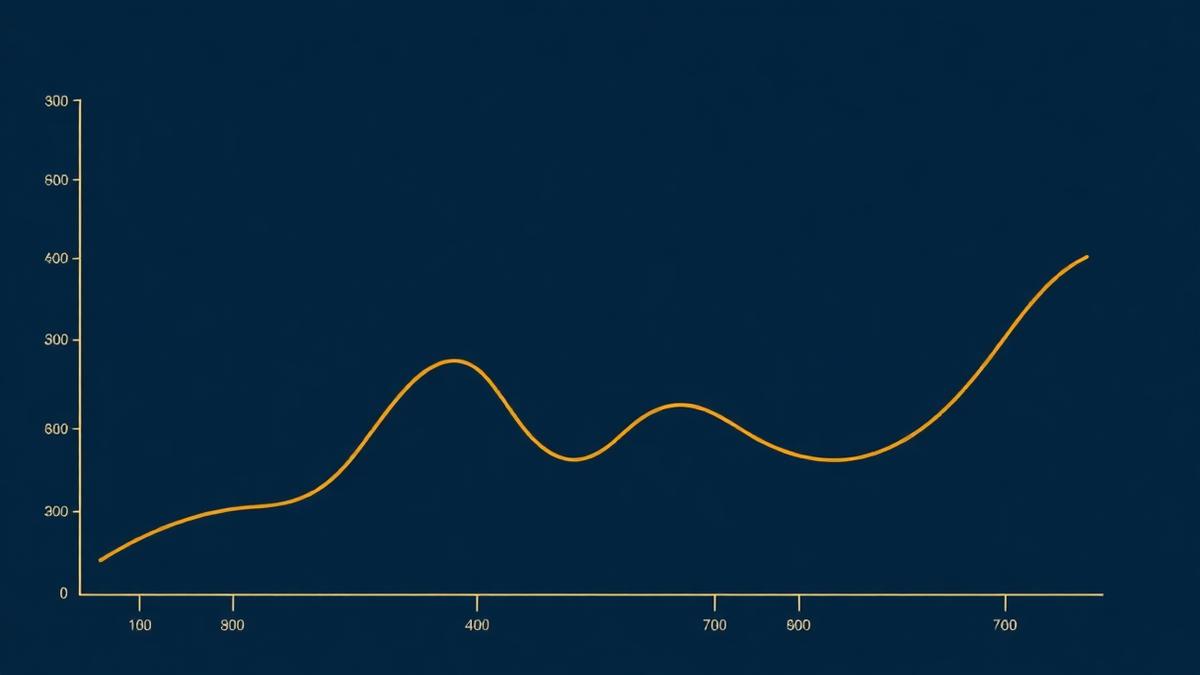
The short-term scenarios include four distinct narratives. Sudden Wake-Up Call represents an abrupt transition in which policy and preferences change quickly, carbon prices rise and asset values reprice. Disasters and Policy Stagnation focuses on severe physical events with cascading global effects. Diverging Realities combines uneven transition progress with severe events in other regions and global spillovers. Highway to Paris represents a more orderly technology-driven transition in which investment supports growth while high-polluting sectors face rising credit and capital costs.
For a bank, these are not simply climate stories. Each narrative creates a different combination of credit migration, market repricing, sector output change, inflation, policy rates, funding needs and collateral effects.
Translate scenarios into risk factors
A stress test should translate the narrative into variables that internal models can use. These may include sector output, carbon price, energy prices, inflation, policy rates, unemployment, property values, corporate cash flows, risk premia, physical damage and productivity loss. The NGFS presentation explicitly highlights financial variables that can be plugged into internal models and a bottom-up structure covering multiple countries and sectors.
The model chain should remain transparent. Scenario variables enter macroeconomic and sector models, which then feed credit and market risk models. If a bank moves directly from a narrative to a final loss number without explaining the transmission, model validation becomes difficult.

Capture finance-economy feedbacks
Traditional stress tests often treat the macroeconomic scenario as an external shock and the banking system as a passive receiver. Climate stress can be different. Credit risk assessment affects investment. Investment affects the transition and recovery. Monetary and fiscal policy affect financing conditions. Asset repricing can change capital costs and borrower behaviour.
The NGFS short-term framework addresses this with models that connect the real economy, monetary policy and climate credit risk. This is important because the severity and persistence of a climate shock may depend on the financial response, not only on the initial physical or transition shock.
Capital is only one output
Climate stress testing should not end with a capital ratio. A decision-useful framework should report credit losses, rating migration, market valuation changes, sector concentration, collateral impairment, liquidity usage, interest income, funding cost and management actions.
Risk appetite should then translate the results into thresholds. A bank may accept a sector exposure under an orderly transition scenario but find it unacceptable under an abrupt transition because refinancing capacity collapses. A geographically diversified mortgage portfolio may appear robust in aggregate but still contain local concentrations that exceed tolerance under flood or wildfire scenarios.

Model uncertainty must be visible
Climate scenarios contain deep uncertainty. The NGFS material itself notes limitations in modelling compound hazards and uses storyline approaches for severe events. The Norges Bank material in the compilation also highlights high model-specification uncertainty in physical risk scenarios.
For governance, this means the bank should not present one stress-loss number as precise. Results should be accompanied by sensitivity ranges, alternative calibrations, key assumptions and reverse stress tests. The most useful question is not whether a single climate loss estimate is correct. It is whether the bank's strategy remains acceptable across a credible range of scenarios and assumptions.
Conclusion
The key requirement is decision usefulness. Climate analysis adds value when it improves risk identification, pricing, capital allocation, portfolio management or governance, while making uncertainty and model limitations explicit.

Sources
Network for Greening the Financial System. NGFS Short-Term Scenarios for central banks and supervisors. May 2025. https://www.ngfs.net
Battiston, S., Mandel, A., Monasterolo, I. and Roncoroni, A. Climate credit risk and corporate valuation. https://cepr.org/publications/dp20239
Norges Bank Investment Management. Economic impacts and pricing of climate risk. Discussion Note, 27 February 2026. https://www.nbim.no
Disclaimer: This article is professional risk-management analysis and is not investment, legal or regulatory advice.