
Logic trees are useful, but they are not universal
Logic trees have been used for decades in probabilistic risk assessment because they provide a disciplined way to represent alternative assumptions. They are effective when the problem can be decomposed into a manageable set of branches with defensible weights. The difficulty arises when hazards interact, dependencies change over time and losses emerge through feedback loops rather than one-directional pathways.
The 2026 opinion paper in the source compilation, Rethinking Uncertainty: Why Disaster and Climate Risk Models Must Move Beyond Logic Trees, argues that climate and disaster modelling increasingly requires adaptive structures that can learn from new evidence and represent multi-causal relationships.
Bayesian thinking changes the treatment of uncertainty
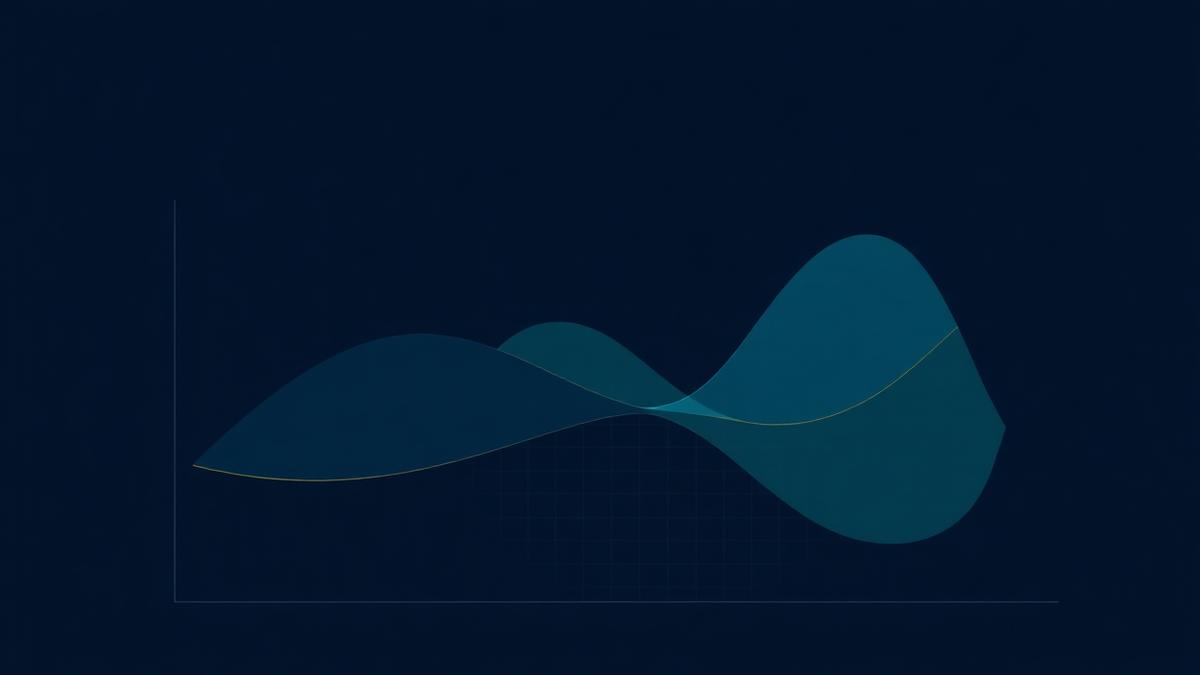
In a Bayesian framework, uncertainty is represented as a distribution of beliefs rather than a fixed branch weight. A prior distribution represents the current state of knowledge. New data update that prior through the likelihood, producing a posterior distribution. The process can be repeated as new events, observations or expert information become available.
This is attractive in climate and catastrophe risk because the data problem is unusual. Extreme events are rare, historical samples may not be representative of future climate conditions, exposure changes over time, and expert judgement remains important. Bayesian methods provide a formal way to combine these information sources while keeping the assumptions visible.
The practical value is auditability
Underwriting and risk management already use expert judgement. The issue is that judgement is often embedded informally in scenario weights, overrides or manual adjustments. A Bayesian approach can make that judgement explicit as a prior, which can then be challenged, documented and updated.
For model governance, this is valuable. Validation can ask how the prior was selected, how sensitive the posterior is to the prior, whether the data are informative, and how quickly the model learns after new events. This is more transparent than treating expert judgement as an unobservable adjustment outside the model.
Bayesian networks help with dependencies
A Bayesian network extends the framework by representing conditional dependencies among variables. For flood risk, for example, water depth, velocity and duration may affect different assets and fragility states before producing a loss distribution. New evidence can update damage parameters and correlations.
The source paper goes further and discusses causal hypergraphs for high-order interactions that cannot be represented well through pairwise dependencies. The idea is relevant to supply chains and infrastructure, where several conditions may need to occur jointly before a systemic loss emerges. This is conceptually powerful, although it also introduces computational and governance complexity.
Complexity should be proportional to the problem
The strongest point in the source paper is not that logic trees should disappear. It explicitly argues for the simplest model that adequately captures the phenomenon. A small, well-bounded problem may still be modelled effectively with a deterministic design or compact logic tree.
Bayesian and network-based methods become more valuable when the risk is non-stationary, data are sparse, dependencies are material, multi-hazard interactions matter, or the model needs to update as new evidence arrives. Complexity is justified only when it improves decision quality or risk representation.

Implications for financial risk
For insurers and banks, the practical opportunity is to move from static climate assumptions toward learning systems. Bayesian updating can support hazard frequency, vulnerability, business interruption, correlation and recovery assumptions. It can also help document how expert judgement changes after an event.
The model-risk challenge is equally important. Priors can be biased, networks can encode incorrect causal assumptions, and complex models can become difficult to validate. Bayesian methods do not remove uncertainty. Their advantage is that they make uncertainty a first-class model object that can be updated, tested and governed.
Conclusion
The key requirement is decision usefulness. Climate analysis adds value when it improves risk identification, pricing, capital allocation, portfolio management or governance, while making uncertainty and model limitations explicit.

Sources
Velasco-Reyes, E.R. and Pui, A. Rethinking Uncertainty: Why Disaster and Climate Risk Models Must Move Beyond Logic Trees. 21 January 2026.
Pitman, A.J. et al. Linking physical climate risk with mandatory business risk disclosure requirements. https://doi.org/10.1088/1748-9326/ad4377
Nayak, A. et al. Catastrophic hyperclustering and recurrent losses. https://doi.org/10.1038/s44304-025-00136-w
Disclaimer: This article is professional risk-management analysis and is not investment, legal or regulatory advice.